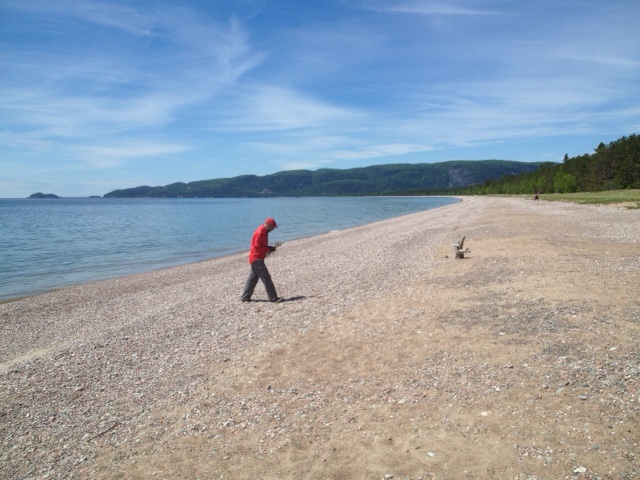
The Twilight Zone that is Northwestern Ontario is a place I’d been through before and survived. But this time I had my doubts.
My first venture into the unknown was in Bryce’s under-powered little pickup towing a tiny, crammed U-Haul trailer when I helped him move to Halifax in September 2013. The Twilight Zone scared me then. It scared me more this time knowing Clive and I would be venturing into The Twilight Zone on bicycles.
The freakishly long stretches where nary a soul resides spooked Bryce when it took us only the better part of two days to make it from the Manitoba border to Sault Ste. Marie. “One town at a time, Bryce, one town at a time,” I told him.
They seem to be between 80 and 120 kilometres apart. I had to say those words to myself as we trundled along for 13 days, with only one of them for rest, to get to the Soo.
Sure there’s the big city, Thunder Bay, and decent-sized towns like Dryden, Marathon and Wawa. But that’s not much on such a long piece of highway. Boredom is inevitable. It will set in at some point, likely multiple times.
One thing we’ve seen a lot of in The Twilight Zone are aliens. Americans love to come up here to fish at this time of the year. During one short pit stop in Vermiion Bay we saw trucks towing boats from Nebraska, Iowa and North Carolina filling up their gas tanks.
On top of that, it seems most of the vehicles that aren’t commercial or an RV of some variety, have Alberta plates. And they’re not on vacation. Odds are they’ve hired a moving van, filled up a suitcase and hopped in their cars to head home to mommy and daddy at least for a while.
The trip into TBay was a wet one. We got soaked the final two days, although we made exceptionally good time on those days because either there was no wind or it favoured us.
The terrain east of Thunder Bay is a challenge, especially on the second and third days. After a tough stretch from Nipigon to a campground near the tiny town of Rossport, the next day was even tougher. We must have climbed between 30 or 40 hills getting to Marathon. Our friend Blaine, who started that day 20 kilometres farther along in Schreiber, reported his gauge showed elevation climbs for him totalled around 1,300 metres and we did about nine kilometres of climbing before even reaching Schreiber.
When we were trying to figure out our plan for getting from Thunder Bay to Sault Ste. Marie, we were hoping to find a way to do it in six days like we had going from Winnipeg to TBay, both journeys of about 690 km. But the math and the map didn’t add up this time. There were large gaps where campgrounds couldn’t be found. So we did it in seven, and here we are in The Soo after making the long journey around the top of Lake Superior. (“It’s like an ocean without the smell,” declared Clive at one campground.)
The hills we can deal with as long as our legs hold out. What’s harder to handle is Ontario’s shoulders. There are some pockets where there’s a wide enough paved shoulder but for the most part there isn’t much at all. Generally, they’re only about eight inches wide, and when two trucks whiz by in opposite directions as they pass it can be scary for a cyclist.
It’s just mind boggling. If B.C., Alberta, Saskatchewan and Manitoba can do it for their major highways like the Trans-Canada and the Yellowhead, why can’t Ontario do its part on the cross-country path? Guess only Southern Ontario counts.
The skinny, bumpy paved shoulders put cyclists like ourselves in jeopardy. Although shoulders are actually wide it’s almost all gravel or sand. They are unrideable for cyclists. The soft shoulders not only slows them down, it’s dangerous because the sand and gravel is so deep it’s hard to stay balanced.
The Twilight Zone struck again when we went from Marathon to White River, about 95 kilometres. We wanted to go farther but there were no campgrounds listed until Wawa, another 90-plus kilometres. There weren’t any in White River either, so we figured at least we could get a motel instead.
When we rolled into town, I said to Clive, “Well we’ve got a choice between a motel across the highway from Robin’s Donuts, or one next to Robin’s Donuts.” It turned out we had no choice between those two. We went into the Continental and the woman asked if we had a reservation. When we shook our heads she said, ‘Well, then I don’t have a room for you. You might want to try across the street.” Well, you could have pushed me over with a pencil. A No Vacancy sign in The Twilight Zone? What?
It was the same story on the other side of the highway at the White River Inn. They kindly pointed us to a place just up the road and around the corner, Paws Cabins. The co-owner there, Peggy, said everything was reserved. But she offered hope. A group of Michigander fishermen were due in any minute and she wasn’t sure if they needed the whole cabin they’d booked or just the bigger part.
Other than that she was going to offer us an old trailer for $30, which was a better price than most campgrounds in Ontario. Turns out the guys from south of the border didn’t need all that room, so we got lucky and got a room with four beds, a bathroom and a television.
Turns out the skinny on why all the No Vacancy signs in that corridor is they’re filled up with not only those looking to hook a fish or two, but industrial or highway contractors too. Many are also either connected to a local gold mine or looking for new deposits. That’s created a bit of a boom for those in the hospitality industry in the vortex of The Twilight Zone.
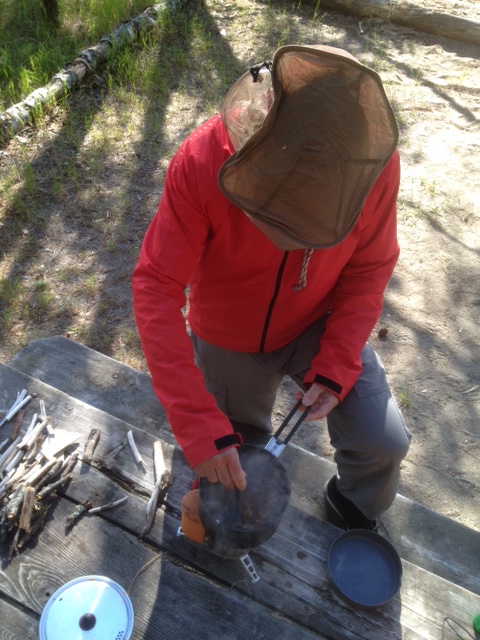
We’ve stayed at a couple of provincial campsites during our journey through The Twilight Zone. Although both were extremely pretty spots – Rossport and Agawa Bay – they are, in my opinion, overrated and overpriced.
They have had the highest campground fees we’ve experienced the entire trip. They also provide less services than private campgrounds or those run by municipalities. There’s no WiFi, the bathrooms are outhouses and you get eaten alive by the bugs. A couple of the Ontario Parks campgrounds we’d planned on using were closed a few years ago because of a lack of use. It’s not hard to figure out why.
The nasty black flies have forced us to utilize an item from the Christmas package Clive’s wife Cheryl gave us that we never really wanted to have to pull out. It’s a mesh insect hat that covers our heads and faces. It’s fitting because as we wander around the campsite preparing dinner or setting up our tents we look like aliens from a bad 1950s space movie. Do-do-do-do.
We’re more than 1,200 kilometres into Ontario (about two-thirds of the way to Halifax in half the time we allotted) and we’ve still got about that much to get across to Quebec. Time to tackle The Twilight Zone The Sequel: Northeastern Ontario.
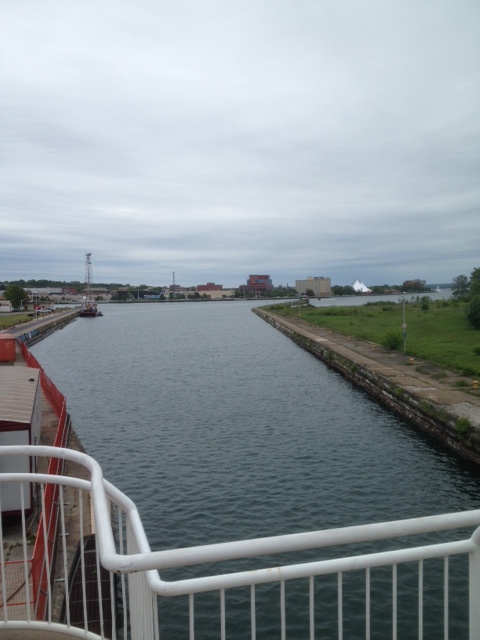
Kilometre count
Day 43: White River to Wawa 92 km; Total: 3,928
Day 44: Wawa to Agawa Bay campground 91 km; Total: 4,019
Day 45: Agawa Bay campground to Sault Ste. Marie 137 km; Total: 4,156
 The 7 Cs blog