
Tom Selleck did his job very well.
Too well.
Sure he was hunky and handsome on television as Magnum, P.I. but his best TV work just may have been his voiceovers for the television commercials on both sides of the border that romanticized recreational vehicle travel.
They have worked.
We have witnessed the evidence on our epic cross-country journey.
Funnily enough, not necessarily on the highway.
And, funnily enough, not in idyllic isolated locations under moonlit skies sans mosquitoes.
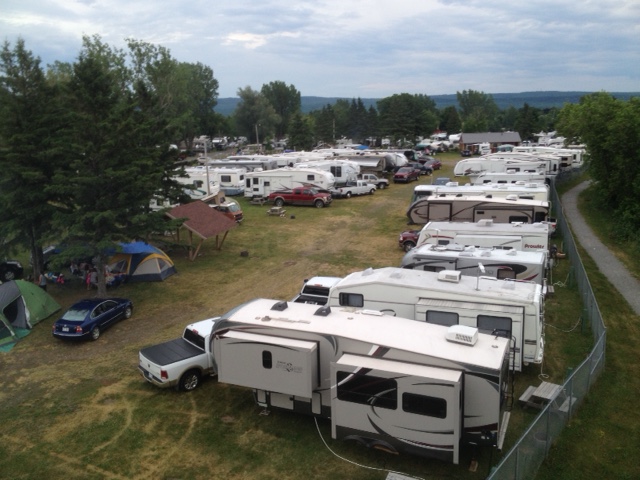
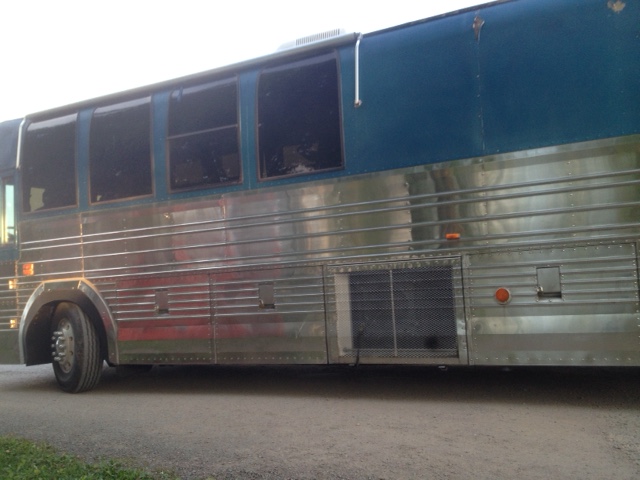
Campgrounds across the country – be they private, provincial or municipal – resemble, in Clive’s words, “RV shows” both in quantity and the bells and whistles on display. The campgrounds are crammed with massive RVs, giant trailers and truck campers of all shapes and sizes lined up one after another. They range from the $500,000 monsters and converted buses to a simple fifth-wheel trailer.
Tents?
Are you kidding? Except for the national parks (more on that later) they’ve almost become a camping pariah, left for the mountain climbing, cross-country skiing and kayaking crowd to keep alive in the back country.

There’s very few tenters, and private campgrounds often tuck them away from the labyrinth of 30-volt, 50-volt, drive-through sites catering to the RV crowd that make up the overwhelming bulk of business.
Most RVers prefer private parks. Most rent their spots over the long term, not by the night, and only occasionally by the week. They set down roots and stick around for the season.
That’s why as elaborate as the condos-on-wheels are, so are the sites. Many have permanent structures attached to the so-called vehicles. They have expansive patios, snazzy outdoor furniture, garden sheds, gardens, lawn decorations, and all sorts of outdoor paraphernalia you’d normally see in a suburban yard.
They are summer cottages more than they are vehicles to hit the highway all season long. The advantage is they’re snowbird cottages, too.
It seems many owners are of the retired variety. No surprise there. It also seems many have sold their homes and used the bucks to finance their extravagant travelling homes. So it’s summers in Canada and winter the U.S. Sunbelt.
It’s easy to understand that reasoning. It’s also easy to understand the desire for all the creature comforts of home away from home – stove, fridge, beds, bathrooms, kitchen tables, satellite television, etc. A thunderstorm hits, they can go inside. It gets too cold, go inside. If mosquitoes are on the rampage, and they frequently are, they can take cover inside (the RV owners that is, not the skeeters).
If they want to get away from the park for a bit or get groceries they don’t hop in the front of their recreational vehicle and fire it up. Nope. They get in the SUV they’ve towed behind it. (Some do get inventive in this regard. Clive and I spotted a long-distance truck in Northern Ontario not only towing his own recreational trailer but perched on the frame behind the cab there was a Smart Car.)
Many people shy away from owning a condo because they don’t like being having just a wall between them and their neighbours.
Well, in a campground there’s even less privacy.
Most don’t seem to have much more than only an arm’s length separation between each site. It’s hard not to notice the comings and goings of every camper, and it’s not hard to figure out what everyone on the block is having for dinner.
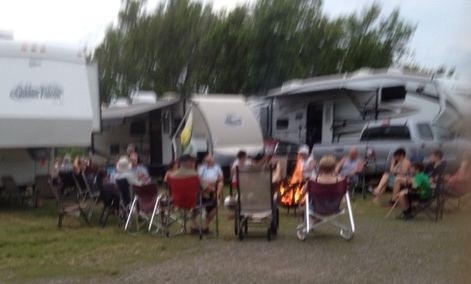
The closeness does breed friendliness, though. The residents – and make no mistake about it, they are residents and not vacationers – visit back and forth gathering around blazing fires. They wander the campground with beer cans or glasses of wine in hand.
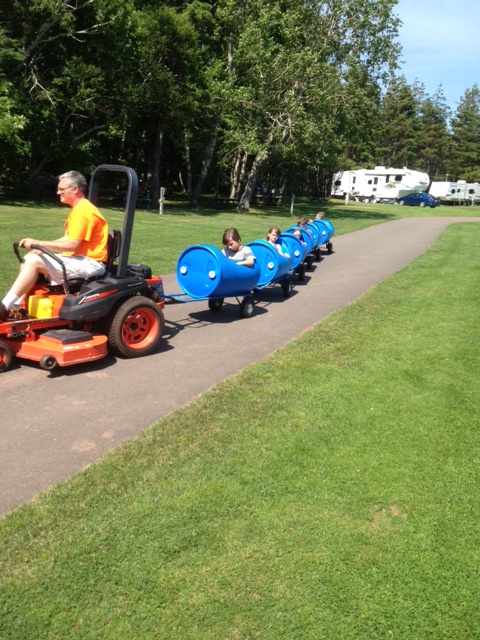
Some of the campgrounds put on special events for their customers. The other day in Shediac, N.B., Parasol Camping had a sign advertising its Christmas in July dinner for an upcoming Saturday night. Others cater to families, like Jellystone Campground (yeah, they even have a Yogi Bear statue and signs featuring Boo Boo and The Ranger) in Borden, P.E.I. at the foot of the Confederation Bridge.
Maybe Tom Selleck will show up as Santa Claus.
We stayed at several municipal campsites that are similar to the private ones, although they generally don’t have as much of a sardine-can feel to them as the private ones.
(The one exception to the RV shows disguised as campgrounds was the latest one we stayed at in Prince Edward Island. The info we had on Vista Bay Campground was it was attached to a golf course about nine kilometres outside of Charlottetown. When we got there all we could see was a fading sign at the end of a long, red clay road. There were no RVs, trailers or tents in sight. But it was late and our options were few so we ventured up the road to a farmhouse with equipment and stuff scattered all over the place. Yes, there was a campground, said the woman. It was up over the crest of the steep hill behind the farm. Sure enough, after pushing our bikes loaded to the handlebars up the hill we discovered there were RVs and trailers at the top in a small campground that was far from full. But the vehicles were blasts from the past, Winnebagos and trailers from the 1970s and ’80s. Owning the fanciest machine in the park was not a priority there.)
The national parks, however, are a different campground cat. Sure they have a fair share of the big boys rolling in, but most of the campers have tents.
Sure some of the canvas structures appear to be capable of housing a bouncy castle and are bigger than some condos on sale in Vancouver, but they are tents. There are lots of little toys for this set, too, but generally it’s a little more laid back. WiFi either doesn’t exist or you need to get up close and personal with the router at the office or the restroom areas just to get a weak online link that gets extremely frustrating. So most of those campers are prepared to be at least a tiny bit off the grid when they arrive.
At Prince Edward Island National Park’s Stanhope Campground, campers flocked to the beach every evening just to see the sunset. You now the kind. Just like the ones in the Tom Selleck commercials.
Kilometre count
Day 77: Borden, P.E.I. to Prince Edward Island National Park Stanhope Campground, 91 km; Total: 6,689 km
Day 78: Round trip from Stanhope Campground to Cavendish, 71 km.; Total: 6,760
Day 79: Stanhope Campground to Charlottetown/Vista Bay 53 km; Total: 6,813
Day 80: Sightseeing in Charlottetown
 The 7 Cs blog